Monday, July 22, 2019

Mothmen and Astronauts on the Cosmic Highway – Dan Drasin – July 12, 2019

https://www.youtube.com/watch?v=KA8EPmH0iXM&list=PLTnkrIx15yuGAGuyxa3a4OBE56hG_8-xk

Published on May 20, 2016

Subscribed 1.7K


Daniel Sheehan is a trial lawyer, appellate attorney, public speaker, author, college and law school educator. For over forty-five years, Daniel’s work has helped to expose injustice, protect fundamental rights, and elucidate a compelling vision for the future of humanity.

Since the launching into earth orbit of The Hubble Space Telescope, the Kepler Space Telescope, and the Planck Space telescope, over 2,000 “Confirmed Exo-Planets” have been discovered and catalogued by our human family and many of them now been officially confirmed to be “habitable” including exo-planets moons. These discoveries have motivated the Vatican to issue an astonishing official announcement declaring that:

“It is more likely than not that our human family, much sooner than anyone had previously anticipated, will be discovering the existence of Extra-Terrestrial LIFE elsewhere in our universe. The time has, therefore, arrived for our human family to begin a very serious discussion of the profound philosophical and theological questions that will be posed to our human family by our discovery of life elsewhere in our universe.”

In this BoulderExo presentation, Daniel Sheehan will discuss the role of the recent discovery of thousands of new “exo-planets” in the advancement of The Disclosure Project relating to the existence of extra-terrestrial intelligence in our universe.

Daniel presented at the 2015 StarworksUSA UFO Symposium in Laughlin, Nevada. Learn more at http://www.starworksusa.com

http://www.BoulderExo.com

Mothmen and Astronauts on the Cosmic Highway – Dan Drasin – July 12, 2019
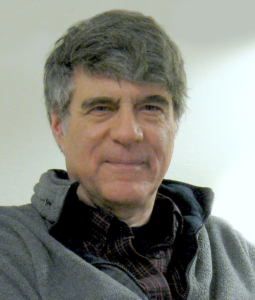


Dan Drasin headshot
Filmmaker and paranormal investigator Dan Drasin presents an illustrated two part talk that spans the “greater reality” of prophecy from ETs and the Mothman to the higher realms of existence through his investigation of channeling the Challenger and Columbia astronauts.
Stalking the Mothman  Dan will share insights based on his first-hand experiences in the “haunted” town of Point Pleasant, West Virginia during 1966 and ’67:  A mysterious flying creature. Men in Black. UFOs galore. The prophesied, tragic collapse of an Ohio River Bridge, and two visits from folks who had died. Some of Dan’s adventures were chronicled in John Keel’s book  The Mothman Prophecies, which inspired the Richard Gere movie of the same name.
Messages from the Other Side  Dan will also present some footage from his latest video project, which documents the mediums who have been channneling the crews of the ill-fated space shuttles Challenger and Columbia. (Dan also produced Calling Earth, a feature documentary about afterlife communication via modern electronics, which he presented at BoulderExo in August, 2017.)
Dan Drasin was born and raised in the New York City area. Since 1973 he has lived in the San Francisco Bay Area except for three years in Boulder, 1992-95.  His interests are broadly scattered throughout the arts, sciences, and humanities. Following an educational journey through Pratt Institute, Harvard University, and the New School, he began an independent career as a documentary filmmaker and media producer that has lasted for most of his adult life, including a 44-year affiliation with New Dimensions Radio. He has also lived a “parallel life” as a researcher in the fields of consciousness and anomalous phenomena. Dan’s professional website is dandrasin.com. His other site, newscience2020.com, features videos and articles about science in the service of expanded awareness.

When:  Friday, July 12, 2019  at 7:00 P.M.  (doors open at 6:15 P.M.)
Where: Colorado Law @ CU Boulder Wolf Law Building
2450 Kittredge Loop Dr., Boulder, CO 80309 (NE corner of Baseline Rd. and Broadway St.)


Sunday, July 21, 2019

The Hidden Life of Trees


The Hidden Life of Trees: What They Feel, How They Communicate—Discoveries from A Secret World Kindle


Peter Wohlleben is the acclaimed author of the international bestsellers The Hidden Life of Trees and The Inner Life of Animals. He spent over twenty years working for the forestry commission in Germany before leaving to put his ecological ideas into practice. Today he manages a forest academy and an environmentally friendly woodland in Germany, where he is working for the return of primeval forests.
  • File Size: 1443 KB
  • Print Length: 290 pages
  • Page Numbers Source ISBN: 0008218439
  • Publisher: Greystone Books (September 13, 2016)
  • Publication Date: September 13, 2016
  • Sold by: Amazon Digital Services LLC
  • Language: English
  • ASIN: B01C9116AK


Showing 1-8 of 1,192 reviews


September 26, 2016
Format: Kindle EditionVerified Purchase

As a young lad in Germany, Peter Wohlleben loved nature. He went to forestry school, and became a wood ranger. At this job, he was expected to produce as many high quality saw logs as possible, with maximum efficiency, by any means necessary. His tool kit included heavy machinery and pesticides. This was forest mining, an enterprise that ravaged the forest ecosystem and had no long-term future. He oversaw a plantation of trees lined up in straight rows, evenly spaced. It was a concentration camp for tree people.

Wohlleben is a smart and sensitive man, and over the course of decades he got to know the tree people very well. Eventually, his job became unbearable. Luckily, he made friends in the community of Hümmel, and was given permission to manage their forest in a less destructive manner. There is no more clear-cutting, and logs are removed by horse teams, not machines. In one portion of the forest, old trees are leased as living gravestones, where families can bury the ashes of kin. In this way, the forest generates income without murdering trees.


Wohlleben wrote The Hidden Life of Trees, a smash hit in Germany. It will be translated into 19 languages. The book is built on a foundation of reputable science, but it reads like grandpa chatting at fireside. He’s a gentle old storyteller explaining the wondrous magic of beautiful forests to befuddled space aliens from a crazy planet named Consume. He teaches readers about the family of life, a subject typically neglected in schools.

Evergreen trees have been around for 170 million years, and trees with leaves are 100 million years old. Until recently, trees lived very well without the assistance of a single professional forest manager. I’m serious! Forests are communities of tree people. Their root systems intermingle, allowing them to send nutrients to their hungry children, and to ailing neighbors. When a Douglas fir is struck by lightning, several of its close neighbors might also die, because of their underground connections. A tribe of tree people can create a beneficial local climate for the community.

Also underground are mycelium, the largest organisms yet discovered. One in Oregon weighs 660 tons, covers 2,000 acres (800 ha), and is 2,400 years old. They are fungi that send threads throughout the forest soil. The threads penetrate and wrap around tree roots. They provide trees with water, nitrogen, and phosphorus, in exchange for sugar and other carbohydrates. They discourage attacks from harmful fungi and bacteria, and they filter out heavy metals.


When a limb breaks off, unwelcome fungal spores arrive minutes later. If the tree can close off the open wound in less than five years, the fungi won’t survive. If the wound is too large, the fungi can cause destructive rot, possibly killing the tree. When a gang of badass beetles invades, the tree secretes toxic compounds, and sends warnings to other trees via scent messages, and underground electrical signals. Woodpeckers and friendly beetles attack the troublemakers.

Forests exist in a state of continuous change, but this is hard for us to see, because trees live much slower than we do. They almost appear to be frozen in time. Humans zoom through life like hamsters frantically galloping on treadmill, and we blink out in just a few decades. In Sweden, scientists studied a spruce that appeared to be about 500 years old. They were surprised to learn that it was growing from a root system that was 9,550 years old.


In Switzerland, construction workers uncovered stumps of trees that didn’t look very old. Scientists examined them and discovered that they belonged to pines that lived 14,000 years ago. Analyzing the rings of their trunks, they learned that the pines that survived a climate that warmed 42°F, and then cooled about the same amount — in a period of just 30 years! This is the equivalent of our worst-case projections today.

Dinosaurs still exist in the form of birds, winged creatures that can quickly escape from hostile conditions. Trees can’t fly, but they can migrate, slowly. When the climate cools, they move south. When it warms, they go north, like they are today — because of global warming, and because they continue to adapt to the end of the last ice age. A strong wind can carry winged seeds a mile. Birds can carry seeds several miles. A beech tree tribe can advance about a quarter mile per year (0.4 km).


Compared to trees, the human genome has little variation. We are like seven-point-something billion Barbie and Ken dolls. Tree genomes are extremely diverse, and this is key for their survival. Some trees are more drought tolerant, others are better with cold or moisture. So change that kills some is less likely to kill all. Wohlleben suspects that his beech forest will survive, as long as forest miners don’t wreck its soil or microclimate. (Far more questionable is the future of corn, wheat, and rice, whose genetic diversity has been sharply reduced by the seed sellers of industrial agriculture.)

Trees have amazing adaptations to avoid inbreeding. Winds and bees deliver pollen from distant trees. The ovaries of bird cherry trees reject pollen from male blossoms on the same tree. Willows have separate male trees and female trees. Spruces have male and female blossoms, but they open several days apart.

Boars and deer love to devour acorns and beechnuts. Feasting on nuts allows them to put on fat for the winter. To avoid turning these animals into habitual parasites, nuts are not produced every year. This limits the population of chubby nutters, and ensures that some seeds will survive and germinate. If a beech lives 400 years, it will drop 1.8 million nuts.

On deciduous trees, leaves are solar panels. They unfold in the spring, capture sunlight, and for several months manufacture sugar, cellulose, and other carbohydrates. When the tree can store no more sugar, or when the first hard frost arrives, the solar panels are no longer needed. Their chlorophyll is drained, and will be recycled next spring. Leaves fall to the ground and return to humus. The tree goes into hibernation, spending the winter surviving on stored sugar. Now, with bare branches, the tree is far less vulnerable to damage from strong winds, heavy wet snows, and ice storms.


In addition to rotting leaves, a wild forest also transforms fallen branches and trunks into carbon rich humus. Year after year, the topsoil becomes deeper, healthier, and more fertile. Tree plantations, on the other hand, send the trunks to saw mills. So, every year, tons of precious biomass are shipped away, to planet Consume. This depletes soil fertility, and encourages erosion. Plantation trees are more vulnerable to insects and diseases. Because their root systems never develop normally, the trees are more likely to blow down.


From cover to cover, the book presents fascinating observations. By the end, readers are likely to imagine that undisturbed forests are vastly more intelligent than severely disturbed communities of radicalized consumers
. More and more, scientists are muttering and snarling, as the imaginary gulf between the plant and animal worlds fades away. Wohlleben is not a vegetarian, because experience has taught him that plants are no less alive, intelligent, and sacred than animals. It’s a wonderful book. I’m serious!
\


January 15, 2017
Format: HardcoverVerified Purchase

Why people have to give a book one star only because it's "above their understanding" is beyond me. That one star should go to the reviewer, not to the book. Then, about five people gave this book rave reviews accompanied by two stars. ????? And then there were reviewers who first cited their multiple PhD's, BS's and Masters degrees, to show they are REAL scientists, and then went on to say that that is why they are all rattled and horrified by the simplicity and anthropomorphism of Wohlleben's approach.

Let's please grow up. A grey and dour, soulless "scientific" approach to a subject will not engage average mortals, and those are the ones who need to know. The wish for such an approach doesn't identify you as a scientist either; it identifies you as a grey and dour, soulless person with no interest in mystery. This book is not written for you.


This book is written for normal people, who are interested in trees and nature and not afraid of learning facts that upset their worldview, and who are willing to accept that there are things we cannot, yet or fully, explain. This relatively recent field, of the interconnectedness of trees and of the forest as a giant organism, is unbelievably interesting and will, no, must, have far reaching consequences for our thinking about the environment, and by extension for our thinking about ourselves. I am not a scientist, and I don't care for a purely scientific approach to life. I am also not afraid of anthropomorphism - it is a valuable tool for us humans (anthropoi) to understand the world around us. Already 2,500 years ago Protagoras revolutionized philosophical thinking by positing that "man is the measure of all things". For most of us, that will remain the norm for a long time to com
e.

Also, trees are not aliens, they are more like us than we think.
There is a lot in the trees' behavior that they share with us. The need to survive powerfully and procreate is common between man and tree.

Wohlleben writes beautifully and lyrically. That is not a sin and doesn't take away from his being a consummate scientist. One can be a scientist and at the same time be in awe of mystery.

In a very recent interview with The Guardian, Wohlleben said "scientists over the last 200 years have taught us that nature works without soul.” This book successfully discredits that approach, which has been ready for the scrap heap for too long.

This is a terrific book that can be fascinating to scientists and non-scientists alike. It has enough footnotes to allow for wider study of the subject for the intellectually adventurous.

The collaboration of Wohlleben and Dr Suzanne Simard of the University of British Columbia in Vancouver, Canada has led to a TV documentary on the subject, "Intelligent Trees". The DVD is available on Amazon.


 Edition
by Peter Wohlleben (Author), Tim Flannery (Foreword), & 1 more
Are trees social beings? In this international bestseller, forester and author Peter Wohlleben convincingly makes the case that, yes, the forest is a social network. He draws on groundbreaking scientific discoveries to describe how trees are like human families: tree parents live together with their children, communicate with them, support them as they grow, share nutrients with those who are sick or struggling, and even warn each other of impending dangers. Wohlleben also shares his deep love of woods and forests, explaining the amazing processes of life, death, and regeneration he has observed in his woodland.
After learning about the complex life of trees, a walk in the woods will never be the same again.

Includes a Note From a Forest Scientist, by Dr.Suzanne Simard
Published in partnership with the David Suzuki Institute.