Monday, February 27, 2017

Who Is God?

Online Bible

NEW WORLD TRANSLATION OF THE HOLY SCRIPTURES (2013 REVISION)


 QUESTION 1

Who Is God?


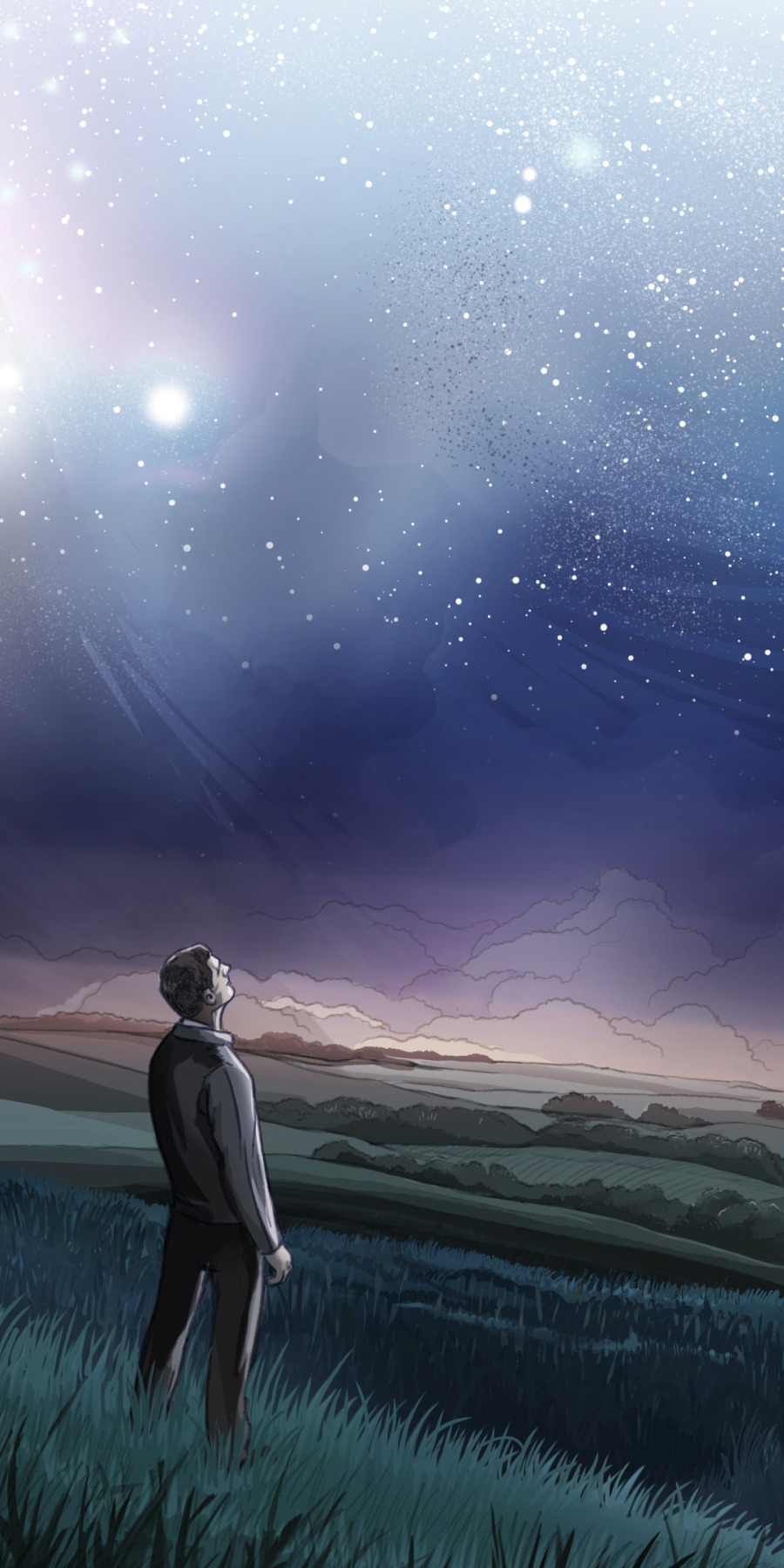
A man looks toward heaven
“May people know that you, whose name is Jehovah, you alone are the Most High over all the earth.”
“Know that Jehovah is God. He is the one who made us, and we belong to him.”
“I am Jehovah. That is my name; I give my glory to no one else, nor my praise to graven images.”
“Everyone who calls on the name of Jehovah will be saved.”
“Of course, every house is constructed by someone, but the one who constructed all things is God.”
 “Lift up your eyes to heaven and see. Who has created these things? It is the One who brings out their army by number; he calls them all by name. Because of his vast dynamic energy and his awe-inspiring power, not one of them is missing.”

Learn More

Does God Have a Name?

God has many titles, including Almighty, Creator, and Lord. But God’s personal name is used some 7,000 times in the Bible.

Faith by itself, without works, is dead.—Jas. 2:17.

Monday, February 27 Faith by itself, without works, is dead.—Jas. 2:17.
If you have strong conviction, it is reasonable to expect that you will show it by your actions. Young ones must also manifest “holy acts of conduct.” (2 Pet. 3:11) To do so, you must be morally clean. How are you doing in that regard? For exam- ple, think about the past six months. How have you demon- strated that your “powers of dis- cernment” have been trained to dis- tinguish right from wrong? (Heb. 5: 14) Can you think of specific occa- sions when you resisted temptation or peer pressure? Does your con- duct at school speak well of your faith? Do you stand up for your faith rather than try to blend in with your classmates just to avoid ridicule? (1 Pet. 4:3, 4) Admittedly, no one is perfect. Even longtime servants of Jehovah may at times feel timid about taking a public stand for their faith. However, a person who is dedicated to Jehovah will right- ly be proud to bear God’s name, and he shows this by his conduct. w16.03 2:10, 11

The Nature Fix: Why Nature Makes us Happier, Healthier, and More Creative 1st Edition by Florence Williams


An intrepid investigation into nature’s restorative benefits by a prize-winning author.
For centuries, poets and philosophers extolled the benefits of a walk in the woods: Beethoven drew inspiration from rocks and trees; Wordsworth composed while tromping over the heath; and Nikola Tesla conceived the electric motor while visiting a park. Intrigued by our storied renewal in the natural world, Florence Williams set out to uncover the science behind nature’s positive effects on the brain.
In this informative and entertaining account, Williams investigates cutting-edge research as she travels to fragrant cypress forests in Korea to meet the                                                                                                                                                                                                                                                                                                                                                                                                                                                                                                                                                                                                                                                                                                                                                   rangers who administer “forest healing programs,” to the green hills of Scotland and its “ecotherapeutic” approach to caring for the mentally ill, to a river trip in Idaho with Iraqi vets suffering from PTSD, to the West Virginia mountains where she discovers how being outside helps children with ADHD. The Nature Fix demonstrates that our connection to nature is much more important to our cognition than we think and that even small amounts of exposure to the living world can improve our creativity and enhance our mood. In prose that is incisive, witty, and urgent, Williams shows how time in nature is not a luxury but is in fact essential to our humanity. As our modern lives shift dramatically indoors, these ideas―and the answers they yield―are more urgent than ever.


“The Nature Fix is a beautifully written, thoroughly enjoyable exposition of a major principle of human life now supported by evidence in biology, psychology, and medicine.” (Edward O. Wilson, University Research Professor Emeritus, Harvard University)


“I’m no tree hugger, but The Nature Fix made me want to run outside and embrace the nearest oak. Not for the tree’s sake but mine. Florence Williams makes a compelling, and elegant, case that nature is not only beautiful but also good for us. If Thoreau were steeped in modern neuroscience and possessed an endearingly self-deprecating sense of humor, the result would be the book you hold in your hands.” (Eric Weiner, New York Times best-selling author of The Geography of Genius)

 “Florence Williams, keen observer, deft writer, creates a fascinating mosaic here. What are the costs―to us!―of humanity’s increasing disconnection from nature? What are the likely benefits―to us!―of retaining that threatened connection?…Large.” (David Quammen, New York Times best-selling author of Spillover)


About the Author

Florence Williams is a journalist and contributing editor to Outside magazine. Her work has appeared in the New York Times, the New York Times Magazine, and National Geographic among others. Her first book, Breasts: A Natural and Unnatural History, was a New York Times Notable Book of 2012 and the winner of the Los Angeles Times Book Prize in Science and Technology. Williams lives in Washington, DC.


Sunday, February 26, 2017

keeping a simple eye


15. How can followers of Jesus demonstrate that they are keeping a simple eye, and why is this the course of wisdom?
15 Followers of Jesus today see the wisdom of keeping a simple eye. They therefore avoid weighing themselves down with unnecessary debt and with mundane pursuits that consume too much attention and energy. (1 Timothy 6:9, 10) Many have taken steps to simplify their lifestyle so that they can devote more time to the Christian ministry, perhaps even serving as full-time Kingdom proclaimers. There could hardly be a wiser course to pursue, for keeping Kingdom interests in their rightful place results in the greatest happiness and satisfaction.—Matthew 6:33.


OUR CHRISTIAN LIFE AND MINISTRY–MEETING WORKBOOK JULY 2016

 LIVING AS CHRISTIANS

Keeping Our Life Simple Helps Us Praise God

00:00
00:58
Today, it is easy to complicate our lives with many things. Time and energy are required to shop for, pay for, use, maintain, and safeguard possessions. Jesus lived a simple life so that material possessions would not needlessly pull him away from his ministry.—Mt 8:20.
A couple at a meeting of Jehovah’s Witnesses
How could you simplify your life so that you can do more in the ministry? With some adjustments, could someone in your household join the pioneer ranks? Even if you are currently in full-time service, have you gradually allowed material things to complicate your life? A simple life in Jehovah’s service is a happy, contented life.—1Ti 6:7-9.
7  For we have brought nothing into the world, and neither can we carry anything out. 8  So, having food and clothing, we will be content with these things. 9  But those who are determined to be rich fall into temptation and a snare and many senseless and harmful desires that plunge men into destruction and ruin.
Write down ways that you can simplify your life.


\The Bible associates wisdom with modesty, which includes being aware of our limitations. (Proverbs 11:2) Jesus was modest and realistic in what he expected of himself. He knew that he was not going to convert everyone who heard his message. (Matthew 10:32-39) He also realized that there was a limit to the number of people that he would personally be able to reach. So he wisely entrusted the disciple-making work to his followers. (Matthew 28:18-20) He modestly acknowledged that they would “do works greater than” his own, for they would reach more people over a greater area and for a longer period of time. (John 14:12) Jesus also recognized that he was not beyond needing help. He accepted the aid of the angels who came to minister to him in the wilderness and of the angel who came to strengthen him in Gethsemane. In his moment of greatest need, the Son of God cried out for help.
17 We too need to be modest and realistic in what we expect of ourselves. We certainly want to work whole-souled and to exert ourselves vigorously in the preaching and disciple-making work. (Luke 13:24; Colossians 3:23) At the same time, we need to remember that Jehovah does not compare us with one another, nor should we. (Galatians 6:4) Practical wisdom will help us to set realistic goals in accord with our abilities and circumstances. In addition, wisdom will guide those in positions of responsibility to acknowledge that they have limitations and that they need help and support from time to time. Modesty will enable such ones to accept the help graciously, recognizing that Jehovah may well use a fellow believer to become “a strengthening aid” to them.—Colossians 4:11.
 

The Coming David Osborne


Excerpt

The Coming

David Osborne

February 23, 2017 
The following is from David Osborne’s novel, The Coming. Osborne is the co-author of five nonfiction books: The Price of Government, The Reinventor's Fieldbook, Banishing Bureaucracy, Reinventing Government, and Laboratories of Democracy. He writing appears in Washington Post, The Atlantic, The New York Times Magazine, Harper's, The New Republic, Governing, Education Week, U.S. News, and other publications.
September 1805
William Clark tucked his head down as the rain dripped off his hat. He was a large-boned man, with a long, reddish face and nose and a high brow. It was a rough face but confident, accustomed to command. He rode at the head of a long procession—31 men, one woman, and one child—snaking its way up a steep, forested slope. Clark’s horse slipped on the mud-slick trail, and those on foot stopped every few minutes, breathing hard, while the packhorses strained under their loads, snorting and blowing.
Would they ever make it over these godforsaken mountains? Clark though back to the day, less than a month ago, when he had first reached the Divide. It had been a warm afternoon, and he had been sweating from the climb, his heart pounding in his chest. Lewis had warned him, but when the view finally opened up, he had stopped dead. Spread out before him were range after range of immense, snowcapped peaks, as far as the eye could see. He counted five ridges, all higher than any mountains he had ever beheld.
The wooded trail they now ascended had settled on top of a ridge that rose from south to north, no more than ten feet wide. Much of the timber on the high points had been burned and blown down, so they had to pick their way around and over a jumble of fallen trees. As Clark wound his way off the ridge around a downed spruce, the bay mare that carried his trunk and writing desk slipped and rolled. He watched as she slid for 40 yards before the desk slammed into a tree and splintered. “Son of a bitch,” he muttered.
Article continues after advertisement
He dismounted, grabbed a rope that lay coiled against his saddle, and walked back to where a knot of men had gathered. He threw one end of his rope to Peter Weiser: “Tie this to a tree.” When it was secure, he let himself down the slope until he reached the mare, which shied from him. He spoke to her in a low voice, standing quite still, until she gentled enough for him to get close. He cut off the broken desk and trunk, then tied the rope to the trunk so the men could haul it up. He would leave the desk. When they threw the rope back down, he tied it to the mare’s lead. He stepped back and gave her a swat on the hindquarters; Collins, Weiser, and York heaved on the rope, and the mare struggled up the slope.
Clark started up behind her but slipped and fell to his hands and knees in the mud. “God damn this mountain to hell!” He wiped his hands on his wet leggings and got to his feet. Collins threw him the rope, and the men slowly pulled him back up.
The trail grew steeper as they fought their way upward. Two other horses fell and rolled. It took ten men to get one of them back up on the ridge; the other came up so lame, they had to shoot it. They unpacked its load of cooking pots and utensils and parceled them out to other horses.
“We should butcher that animal,” young Shannon told Clark. “You volunteerin’ to carry the meat?”
“No sir. But . . .”
“You think these other horses can carry more weight?”
“No sir,” the 19-year-old admitted. “But couldn’t we cook it?”
“We stop to cook now, we’ll never get up this mountain.” They left the dead horse where it lay.
At noon the land flattened out a bit. Old Toby, their Shoshone guide, found a spring hidden amongst a thick stand of tall pines, their bases choked with huckleberry. Stop here, eat, he signed. Clark nodded, directed Collins to light a fire and heat up some parched corn and portable soup—a vile mixture Lewis had procured in Philadelphia in powdered form. As the men straggled in, they took the soup and corn silently, too spent to do more than grumble.
The rain had stopped now and the clouds had begun to lift. Lewis sat down beside Clark, a bowl in one hand, his spyglass in the other. He raised the glass, trained it on the mountains to the south, their peaks like a wall of teeth bared against a foe.
“Did it snow up there again?” Clark asked. Yesterday, at a stony summit they’d crossed before descending to the river, it had snowed for two hours. Lewis lowered the glass and nodded. Lewis had an odd combination of a gentleman’s face—serious gray eyes, long black lashes, small, tight-lipped mouth—atop a woodsman’s frame. “We’re five days in, and Toby said the Pierced-Nose Indians do it in six days.”
“You think we’re traveling as fast as Indians?”
“I do.”
“We don’t even know if we’re on the right trail.”
Lewis gazed at him. “We will not spend a second winter east of these mountains.”
Clark remembered the day they had met, a decade ago, when the younger man had reported to his command at Fort Greenville—stiff, bowlegged, standing so straight as he saluted it seemed he would fall over backward. He was the most determined man Clark had ever encountered.
When they started back up, Clark’s horse proved fatigued beyond all endurance. He had little choice but to proceed on foot, though his left leg still ached from a fall he’d taken exploring Lewis’s River.
Behind him, two more horses hell and rolled until they wedged against downed trees, but only one had to be left behind. Though the rain held off, the temperature was dropping.
Near the top of the trail wound around immense granite knobs that erupted out of the mountainside. Finally they intersected a ridge running east-west, where the real trail appeared, some five feet wide and clear as day. Drouillard and Colter lay supine on a fallen pine, waiting for them. As they rose to their feet, Clark and Toby stood mute, completely spent. As far as they could see, in every direction, lay mountains, the highest peaks frosted in white.
The hunters had killed but two pheasants; up this high, they said, game was scarce.
“Ain’t much of a Northwest Passage, is it?” Colter muttered.
Toby led them west along the narrow ridge. The rest of them spread out, searching the hillside for any sign of a spring. As dusk came on, Toby stopped where a bank of old snow lay protected on the northern edge of the ridge. Melt for water, he signed.
Clark felt as if they were at the top of the world, exposed to anything Mother Nature should choose to inflict upon the. There was not flat spot to camp but right on the ridge.
When the first cook arrived, Clark ordered him to broil the remains of the colt they had killed the day before. The rest of the men trudged in through the dark: the Field brothers together; Cruzatte limping; Labiche swearing in French. Charbonneau staggered in the last and collapsed, his ample girth flat on the ground. They devoured what little was left of the horsemeat, along with the pheasants and portable soup, but it was not enough.
Clark sat by the fire to record the day in his journal, as he did every evening. Lewis lowered himself onto a log beside him. “I trust you have confidence we’re on the correct trail now?”
Clark nodded. “But we’re traveling half as fast as the Indians do.”
“How would you know what?”
“Old Toby.”
“He hadn’t got us lost, we wouldn’t have had that climb today.”
The truth of it weighed on Clark. Yesterday, when Toby confessed that he had missed where the trail turned north, in the snow, Sacagawea had let her disgust show. When Clark took her aside, she told him Toby hadn’t been on this trail since he was a boy. Clark kicked himself for not consulting her sooner.
A few days earlier, she had explained that had they simply bought horses from the Mandans, they could have reached the head of the trail in four days’ ride from the Great Falls. Intead, they had spent two months struggling southward up the Missouri, trading with her people for horses, carrying their goods across the Divide, then riding back north for two weeks. Whey had it not occurred to them that the girl might know the upper Missouri country? If they were to reach the Pacific, they could not afford another such mistake.
“We’re nowhere near the end of these mountains,” Clark finally said.
Lewis met his gaze. “Have faith, my friend. One way or another, we’ll make it.”
“If we don’t starve first.”
“When the colts run out, we’ll eat horses.”
“And carry our goods on our backs?”
Lewis’s face knit in exasperation. “Do we have a choice?”
“We could go back, winter in the valley, with the Flatheads.”
  ur pairs of the men’s moccasins. But they had secured the corps from want, then sold the captain 11 horses. And their women. Clark had not enjoyed the nightly company of a woman since Fort Mandan, and he should not have partaken, he knew. Julia—pale, dark-haired Julia—was waiting in Virgina for his return, becoming a woman herself. But when these Indian women came to him he could never resist—their brown skin, brown breasts, so lovely, their unself-conscious pleasure unlike anything he could imagine in a white woman.
“You just want another winter with loose women.”
“I want to survive.”
He turned to Lewis. “What happens when it snows again, Meriwether? We’re high enough we’ll be in the gut of it. What happens if it doesn’t stop? If we can’t find the trail?”
Lewis glared. “We winter on the Pacific.”


From THE COMING.  Used with permission of Bloomsbury. Copyright © 2017 by David Osborne.
American Street Hardcover – February 14, 2017 by Ibi Zoboi (Author) 4.6 out of 5 stars 7 customer reviews #1 Best Sellerin Teen & Young Adult Emigration & Immigration Fiction


American Street Hardcover – February 14, 2017


American Street is an evocative and powerful coming-of-age story perfect for fans of Everything, Everything; Bone Gap; and All American Boys. In this stunning debut novel, Pushcart-nominated author Ibi Zoboi draws on her own experience as a young Haitian immigrant, infusing this lyrical exploration of America with magical realism and vodou culture.
On the corner of American Street and Joy Road, Fabiola Toussaint thought she would finally find une belle vie—a good life.
But after they leave Port-au-Prince, Haiti, Fabiola’s mother is detained by U.S. immigration, leaving Fabiola to navigate her loud American cousins, Chantal, Donna, and Princess; the grittiness of Detroit’s west side; a new school; and a surprising romance, all on her own.
Just as she finds her footing in this strange new world, a dangerous proposition presents itself, and Fabiola soon realizes that freedom comes at a cost. Trapped at the crossroads of an impossible choice, will she pay the price for the American dream?

Summary and Analysis of Black Mass: Whitey Bulger, the FBI, and a Devil’s Deal: Based on the Book by Dick Lehr and Gerard O’Neill Kindle Edition


So much to read, so little time? This brief overview of Black Masstells you what you need to know—before or after you read Dick Lehr and Gerard O’Neill’s book.

Crafted and edited with care, Worth Books set the standard for quality and give you the tools you need to be a well-informed reader.

This short summary and analysis of Black Mass by Dick Lehr and Gerard O’Neill includes:
  • Historical context
  • Chapter-by-chapter summaries
  • Detailed timeline of important events
  • Important quotes
  • Fascinating trivia
  • Supporting material to enhance your understanding of the original work

About Dick Lehr and Gerard O’Neill’s Black Mass:

The New York Times–bestselling Black Mass is a groundbreaking true crime story about the Mafia, the FBI, and the Irish Mob in between them. Journalists Dick Lehr and Gerard O’Neill expose a decades-long partnership between FBI agent John Connolly and notorious Boston mob boss Whitey Bulger.

Connolly taps childhood friend-turned–Irish mobster Bulger to be an informant. But soon enough, Bulger is the one pulling the strings, convincing Connolly to cover up his dirty deeds. This corrupt deal results in a web of crimes including racketeering, drugs, and murder, all leading to an FBI rocked by scandal when the truth comes out.

Shocking and enlightening, Black Mass is an Edgar Award–winning book that magnifies the fine line between law and lawlessness.

The summary and analysis in this ebook are intended to complement your reading experience and bring you closer to a great work of nonfiction.